
Scene 14
The SKU split
The Amazon-wholesale channel (called 1P, short for first-party — where Amazon buys from a vendor and resells) is invitation-only. You can't apply for it directly. We hold the account. When you wholesale your bestseller products to us, they run on 1P alongside your existing FBA program — same listing, same rankings, same reviews; each product in exactly one channel so there's no Add-to-Cart-button (Buy Box) conflict. You keep what's working. We run the wholesale channel on the products where its unit economics actually pay better.
You can't apply. Most 3P sellers who've considered 1P have either been ignored when they tried, or been told by an Amazon rep that direct vendor relationships aren't being expanded. Since late 2024, Amazon has been actively reducing direct vendor relationships, consolidating around larger suppliers and aggregated distributor accounts. We hold the account. We've held it for years. Active vendor on Amazon.ca with EDI integration, AVN feed, assigned vendor manager.
You don't need to leave FBA to start 1P. You just can't open the 1P door alone.
No. The ASIN is the listing. Rankings, reviews, BSR history, A+ Content, brand registry — all attached to the ASIN. When we run a SKU as 1P, we're selling against the same ASIN you already have on FBA. The seller-of-record line changes (yours → Amazon.ca). Everything else stays. Reviews keep accumulating against the ASIN. Ranking history preserved. BSR continues to compound. The customer sees a more-trusted seller line, sometimes a different price, and the same Prime checkmark.
Not every SKU should move to 1P. The point of Hybrid is that each SKU sits in the channel where its unit economics actually work.
SKUs that typically gain from 1P: high-cube items where FBA dimensional-weight pricing punishes you, hero items where Buy Box stability matters more than pricing flexibility, B2B-friendly case packs that hit Amazon Business pricing (1P only), Subscribe & Save consumables (1P's placement is meaningfully stronger), items where the Sold by Amazon.ca trust signal converts measurably better.
SKUs that typically stay on FBA: long-tail items where you want pricing flexibility, fast-iterating items where you're still optimizing, items where your 3P unit economics already work, items you're testing through Amazon Vine.
The SKU-split conversation is the core of every onboarding call we do with a 3P seller. We bring our unit economic model. You bring your SKU list. We figure out together which subset moves to 1P first.
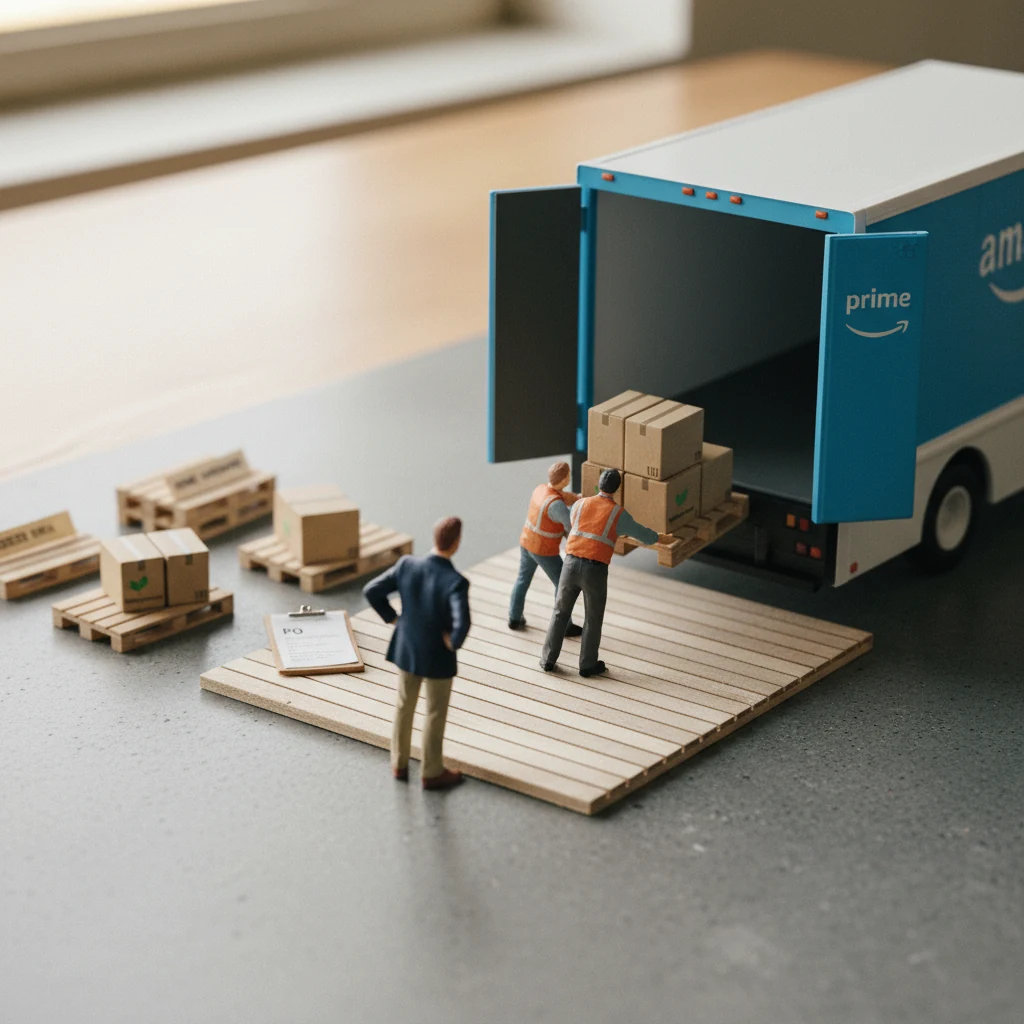
Your existing FBA keeps running. We run 1P on a separate set of SKUs in parallel. Each ASIN in exactly one channel — no Buy Box conflict. The natural starting point for any 3P seller with a working FBA program. Fit: working FBA operation, want to add 1P specifically for hero SKUs, B2B sizes, or Subscribe & Save consumables.
A hand-picked few SKUs through us. Everything else stays on FBA. Fit: you want to test the 1P model on a small surface — typically 1–3 SKUs — before deciding whether to expand. Most lightweight entry point.
We become your only Amazon Canada presence. Your FBA retires; we run everything as 1P. Fit: you've decided FBA's operating model isn't where you want to spend your headcount, or your current FBA is chaotic enough that consolidation is the cleaner path.
Your existing Amazon agency keeps running everything they run today — PPC, A+ content, DSP, brand store, ranking work. We run the 1P channel underneath. Fit: you have an agency on retainer and don't want to disrupt the relationship.

They keep running. PPC, Sponsored Brands, Sponsored Display, DSP — all target ASINs, not sellers. Your ads continue to drive traffic to the same product page; the customer just sees a different seller-of-record line when they arrive. Your brand store is brand-level, not seller-level — it stays exactly as you built it. A+ Content modules attached to the ASIN stay. The one operational note: you may want to adjust PPC bid economics after 60 days because the per-unit math is different on 1P. Most sellers continue running ads at the same level and recalibrate based on observed conversion.
VendorSprout is one layer in your Amazon operating stack. Your FBA, PPC, brand store, agency or in-house team, A+ content, inventory tooling — all stay exactly as you built them. We don't replace any of them. We add one specific capability: the 1P channel for the SKUs where it pays. You stay in the strategic seat. You decide which SKUs go where. The customer sees the same brand, the same listings, the same Prime checkmark.
| Dimension | FBA (you keep running) | 1P via VendorSprout |
|---|---|---|
| Seller of record | Your brand storefront | Sold by Amazon.ca |
| Buy Box | Subject to reseller competition | Structurally stable — Amazon's own listing |
| Pricing control | Yours, day-to-day | Amazon's algorithm |
| Unit economics | FBA fees apply — dimensional, storage, returns | Amazon's margin replaces FBA fees |
| Working capital | You fund inventory through Amazon sell-through | None — we take title at wholesale |
| Disbursement cycle | 14 days from sale, variable | Net 45 (we pay 45 days after Amazon confirms receipt) — predictable |
| Subscribe & Save placement | Available, lower priority | Higher placement priority |
| Amazon Business pricing | Limited | Native (1P only) |
| A+ Content | Yours to manage | Ours, in coordination with you |
| Brand store | Yours | Yours (brand-level, not seller-level) |
| PPC / Sponsored ads | Yours | Yours — targets ASIN, not seller |
| DSP | Yours | Yours |
| Customer service on units | Your responsibility | Amazon's — 1P units only |
| Returns | FBA returns process | Amazon absorbs — 1P units only |
| Vendor Central commercial relationship | Not available to you | Carried on our account |
Direct switch from 3P/FBA to 1P on a single hero SKU. 30–45 to 400+ units / month. Category rank below #40 to #7. Same product, same demand, different channel. The classic 3P-to-1P pattern.
High-cube SKU FBA dimensional-weight pricing was punishing. Switched to 1P; 10 to 250+ units / month with improved margins because the unit no longer carried the FBA size-tier penalty. The FBA-fee-escape pattern.
Manufacturer-archetype Hybrid: for brands that have wholesale operations alongside their 3P presence, 1P slots into the existing wholesale apparatus rather than displacing it.
We spent two years optimizing our FBA economics. Our hero SKU was still losing money to dimensional fees. Moved it to 1P via VendorSprout. Same listing, same reviews, finally profitable. — Director of E-commerce, mid-size FBA brand
Thirty minutes. We learn your catalog, your current Amazon performance, the SKUs you're considering for 1P, and whether you work with an agency. You learn whether VendorSprout is a fit and which engagement model makes sense.
We screen your candidate SKU list against 1P unit economics. We bring our model; you bring your sales and cost data. Output: short list of yes SKUs, longer list with notes on what would need to change for them to fit.
We agree on wholesale pricing for each SKU, case packs, MOQs, lead times, payment terms. Net 45 with favourable terms is the default. We sign a wholesale supply agreement.
We map your candidate SKUs to our Vendor Central catalog against the same ASINs you have on FBA. Brand registry coordinated, A+ Content synced. EDI 850/856/810 configured if you have it; email POs if not.
Amazon issues us a PO. We issue you a corresponding PO. You ship from your warehouse (or your 3PL ships) to our designated receiving location. We ship to Amazon's fulfillment network.
SKUs go live as Sold by Amazon.ca on the same ASINs. Buy Box ours. Your existing FBA inventory continues to sell through (or moves per the FBA transition plan from step 3). Regular PO cadence from here.
No. Rankings are attached to the ASIN. The ASIN doesn't change when a SKU moves from 3P to 1P — only the seller of record on the listing changes (yours → Amazon.ca). Your BSR history is preserved, your category rank continues to evolve from where it is today, and the keywords your listing already ranks for keep delivering organic traffic. The listing is the listing.
No. Reviews are attached to the ASIN. They stay exactly as they are and new reviews continue to accumulate against the same listing.
Your Brand Store is brand-level (not seller-level) — it stays exactly as you built it. A+ Content is ASIN-level — it stays on the listings; we coordinate with you on any updates we want to make to the 1P SKUs' A+ modules. Variations (parent/child ASIN structures) stay intact; we sell against the same parent ASIN structure.
Yes. PPC targets ASINs. Your Sponsored Products, Sponsored Brands, Sponsored Display, and DSP campaigns continue to target the same ASIN whether the Buy Box winner is your FBA listing or our 1P listing. The customer journey from ad click to product page is unchanged.
Same answer — DSP targets ASINs and audiences, not sellers. Your DSP continues unchanged. Off-Amazon driving traffic (Google Shopping, paid social) continues unchanged — the destination URL is the same product page.
We agree on a transition plan in onboarding. Common options: sell through existing FBA inventory before 1P launches (slowest), pull FBA inventory back and have it become part of the inventory we buy from you (cleanest), or run a brief overlap period (smoothest customer experience). The right choice depends on your inventory position and how time-sensitive the transition is.
Yes — that's the Hybrid model and the default starting point for almost every 3P seller we work with. Each ASIN sits in exactly one channel; no Buy Box conflict. You decide the SKU split. We can change it over time.
A two-pass decision in onboarding. First pass is unit economics: which SKUs benefit most from 1P's specific advantages (Subscribe & Save algorithm, Business pricing, Buy Box stability, FBA-fee escape for high-cube items). Second pass is operational: which SKUs you want to keep on FBA for pricing flexibility, inventory-control, or testing reasons. Output: SKU list with clear channel assignment, reviewed quarterly.
Yes for the SKUs that stay on FBA — nothing changes there. For the SKUs that move to 1P, your tools will show different data (1P sell-in vs 3P sell-through, different fee structure, different reporting cadence). Your agency relationship is unaffected — most of what they do is brand-level and ASIN-level. The Agency Co-managed engagement model is specifically designed for sellers who want to keep their agency in place.
Yes. We provide regular reporting: PO velocity, sell-through, Buy Box win rate (typically 95%+), category rank, customer review trajectory, vendor-side performance metrics. Cadence and format negotiated; most sellers get monthly performance summaries plus on-demand access to underlying data.
FBA's 14-day disbursement is sell-through driven and variable. Our wholesale terms are Net 45 — we pay you 45 days after Amazon confirms it has received your shipment into its fulfillment network. (Your product drop-ships from you to Amazon, so the clock starts the moment Amazon scans it in.) Most sellers prefer the predictability of Net 45 to the variability of FBA's disbursement cycle, especially for working-capital planning. For sellers who specifically want shorter terms, we can discuss Net 30 with a discount.
No — Amazon sets the 1P Buy Box price algorithmically based on competing market signals. In practice, Amazon prices competitively but not destructively. The wholesale price we pay you is fixed in the wholesale agreement; Amazon's retail price floats. For specific MAP concerns we can negotiate price floors with Amazon in some categories, not all.
Amazon's customer service handles 1P units end-to-end. You don't field returns, complaints, or shipping inquiries on 1P-sold inventory. (For SKUs that stay on FBA, your existing customer-service approach continues unchanged.)
Yes, with some sequencing. Vine is a 3P seller-side program — if you want to use Vine for new SKUs, run those on 3P/FBA through the Vine period, then evaluate moving to 1P after Vine reviews accumulate. We coordinate the handoff so reviews follow the ASIN.
Yes. The wholesale supply agreement is terminable on notice — typical commercial terms, 60–90 days depending on inventory position. SKUs we'd been running on 1P revert to your FBA control with a transition plan we agree on.
No hard minimum. Selective engagements have launched with one or two SKUs. The economics work better with more volume but we don't turn away small starts if the SKU is a clean fit.