
Scene 18
The channel matrix
You already think in channel portfolios — rows of product categories, columns of channels, cells assigned by margin structure and lifecycle stage. The Amazon-wholesale (1P) column is one of the few cells that's hard to fill in. Not because the channel doesn't fit, but because Amazon's vendor program is invitation-only — your client can't apply for it directly. We hold the door. Once we're in the picture, the 1P column becomes a cell you can confidently populate for any brand whose unit economics support it.
Vendor Central operates as an invitation-only program; the path to a direct vendor account for most brands and their advisors has been narrowing for years. Amazon's recent consolidation around larger, longer-tenured suppliers has made the door even tighter. This forces strategists to one of three workarounds: leave the 1P cell empty and explain why; propose a hypothetical 1P state contingent on an invitation the brand probably won't receive; or bring in a partner who already holds the account.
Option three. We're the partner who already holds the account.
No. The matrix is yours. You decide whether 1P belongs in a particular brand's portfolio at all, which SKUs go in the 1P cell, what margin contribution the cell needs to deliver, when in the brand's lifecycle to populate it, and how it interacts with the other channel cells. VendorSprout is the operator who runs the 1P column once you've architected it in. We provide tactical clarity on what the column delivers — unit economics, working-capital effects, Buy Box dynamics, brand-protection benefits — as inputs to your architecture decision. We don't author the architecture itself.
What stays architectural, with you: the channel matrix as a whole — every row, every column, every cell assignment. Channel-conflict frameworks and the policies that resolve them. Margin-contribution requirements per channel. Lifecycle-stage decisions about when to populate which cells. Brand-portfolio architecture if you're working across multiple brands. The strategic client (or in-house) conversations where these decisions get made.
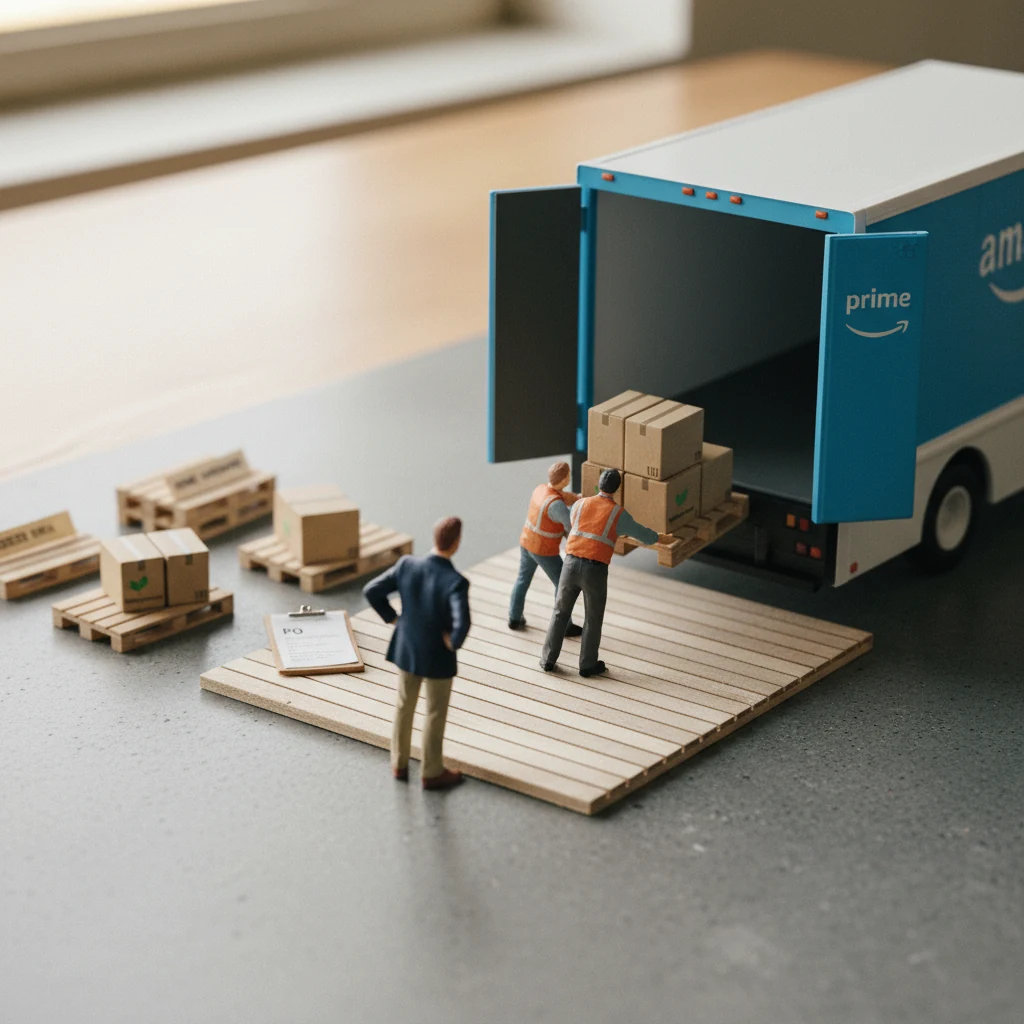
What we run, when the matrix calls for 1P: the Amazon Vendor Central commercial relationship for the SKUs the matrix has assigned to the 1P cell. Catalog setup, A+ Content layout, brand registry overlap, listing health on those SKUs. Wholesale inventory and PO management with the brand. POs, ASN, AVN, chargebacks, deductions, vendor-side compliance. Net 45 payment to the brand on wholesale invoices. Vendor-side performance reporting that you can feed back into your matrix analysis quarterly.
The matrix layer and the operational layer don't compete. The matrix calls the shots; the operation executes one cell of what the matrix called for.
No. Same protections as our agency and consultant partnerships: you're on every call, copied on every email, in the loop on every decision. For strategist partnerships specifically, the architecture conversation between you and your client is yours alone unless explicitly invited otherwise. For in-house heads of distribution, the framing inverts — you are the client, and we report into your channel-architecture work the way any operational partner would. Same protections apply.
For strategists advising multiple brands — solo practitioners with a portfolio of clients, boutique advisories with multiple growth-stage accounts, or in-house channel managers at acquirer/portfolio companies — we can structure a single partnership covering many brands. One master partnership agreement covers attribution, communication, and economics across the entire portfolio. Each client engagement gets its own wholesale supply agreement and operational onboarding, but the partnership layer is unified. Referral economics improve at portfolio scale. For portfolio companies, we've worked with multi-brand acquirers to bring 5–15 brands through a coordinated rollout — prioritized by 1P economic fit and lifecycle stage.
Same structure as our agency and consultant partnerships. Tier-based percentage of wholesale revenue. Starting tier in the mid-single-digit range, scaling to double digits at portfolio volume. Paid quarterly against realized revenue. No expiration. No exclusivity required. For distribution strategists working across portfolios, volume-tier economics are often the relevant entry point. Specifics negotiated in the partner-program agreement.
The brand's existing Amazon operations (your client's FBA, your client's agency if there is one) continue exactly as they do today. We run the 1P channel as a parallel operational layer. Default for strategist-introduced engagements.
The brand's FBA keeps running. We run 1P on a separate set of SKUs in parallel. Each ASIN in exactly one channel — clean architecture, no Buy Box conflict.
A hand-picked few SKUs through us. Lightweight entry. Common when the matrix architecture warrants testing 1P on a small surface before full population.
We become the brand's only Amazon Canada presence. Less common as strategist-introduced — typically reserved for matrix architectures where 1P has been chosen as the dominant Amazon channel for the brand's lifecycle stage.

| What you architect | What we run |
|---|---|
| The channel matrix (rows × columns × cell assignments) | The Amazon Canada 1P channel for assigned SKUs |
| Margin-contribution requirements per channel | Vendor Central commercial relationship |
| Channel-conflict frameworks and resolutions | Catalog setup, A+ Content, brand registry on 1P SKUs |
| Lifecycle-stage decisions for channel population | PO acceptance, ASN, AVN, chargebacks, compliance |
| Brand-portfolio architecture (multi-brand) | Wholesale inventory and PO management with brand |
| Strategic conversations with client / leadership | Net 45 payment to brand on wholesale invoices |
| The matrix as a deliverable / decision artifact | Annual Amazon vendor negotiations for brand's category |
| The architecture review cadence (quarterly, annual) | Vendor-side performance reporting (shared with you) |
VendorSprout is the operator for one specific cell on the channel matrix you author — the Amazon Canada 1P cell. Not a competing architect. Not a strategy provider. Not an attempt to acquire your clients or build a relationship that bypasses your matrix. We're the partnership that makes the 1P column populate-able for the brands whose architecture calls for it. When your matrix says "Amazon 1P should be lit up for these SKUs at this lifecycle stage," you have an operator who can actually deliver on that call — not a placeholder, not a future state, not a footnote.
Matrix-relevant framing: For brands whose architecture already includes wholesale, 1P fits the wholesale column. The manufacturer-archetype Hybrid is the typical resulting configuration.
Matrix-relevant framing: when the architecture identifies a specific SKU as a 1P-cell candidate based on unit-economic analysis, the volume the matrix predicted shows up.
Matrix-relevant framing: when channel-conflict analysis identifies an FBA-dimensional-fee penalty as the binding constraint, moving the SKU to the 1P cell resolves it.
My channel matrices used to have a footnote: '1P requires partnership and direct invitation, which is unavailable to most brands.' That footnote is gone. The 1P column is now a cell I can actually populate. — Independent distribution strategist
Thirty minutes, just you and us. We learn how you architect channel work, your client portfolio, where 1P typically lands in your matrix decisions. For multi-brand portfolios, this conversation covers the master partnership structure.
You drive. We answer 1P-specific questions when invited. The architecture framing is yours.
We screen the candidate SKUs (or portfolio for multi-brand engagements). You're copied on the output; architectural decisions remain yours.
Direct between us and the brand (with you copied). Wholesale agreement signed.
Standard onboarding operational work. SKUs mapped to our Vendor Central catalog.
SKUs go live as Sold by Amazon.ca. The 1P column in your matrix now has a live operational implementation. Quarterly cross-team reviews keep architecture and operation aligned.
No. You author the matrix; we run one cell. The architecture decisions — what's in the portfolio, what's in each channel, what margin requirements apply, when to populate which cells — belong to you. We provide tactical clarity on what the 1P cell delivers operationally; the architecture conclusions are yours to draw.
No. Same protections as our agency and consultant partnerships. For strategist partnerships specifically, the architecture conversation between you and your client is yours alone unless explicitly invited otherwise.
Tier-based percentage of wholesale revenue. Starting tier in the mid-single-digit range, scaling to double digits at portfolio volume. Paid quarterly against realized revenue. No expiration. For strategists working across multiple brands or portfolio engagements, volume-tier economics are often the relevant entry point.
Yes — and this is one of the highest-value uses of the partnership for strategists working at portfolio scale. One master partnership agreement covers attribution, communication, and economics across the portfolio. Each individual client engagement gets its own wholesale agreement and onboarding, but the partnership layer is unified.
Brands doing $500K+ in Amazon Canada-relevant annual revenue (or credible runway to that), with at least one SKU whose unit economics show meaningfully better margin contribution on 1P than on 3P FBA. Categories where Amazon Canada has scale (consumer physical goods, broadly). The architectural fit conversation happens on the partnership call.
Yes. The four engagement models (Full, Hybrid, Selective, Agency Co-managed) can apply differently to different brands in a portfolio. We've worked with portfolios where some brands are Selective on a single hero SKU, others are Hybrid across a small SKU set, and a few are Full Channel. The model per brand is the strategist's call.
Yes. The partnership structure works the same way — you're the strategist, your brand's organization is the client. Referral economics don't apply in the same way (you're employed, not paid on referral), but the operational partnership and the architecture-respecting framing is identical. Many in-house heads of distribution prefer this arrangement because they retain full architecture control while offloading the 1P operational layer.
We respect the conflict-resolution framework you've authored. If your matrix says certain SKUs are reserved for retail-wholesale and shouldn't appear on 1P (for MAP, big-box-relationship, or brand-positioning reasons), we don't include them. The conflict-management policy is yours; we follow it as a constraint on the cells we're permitted to operate.
Yes. The architecture-redesign conversation often benefits from concrete operational reference on the 1P channel. We can join one diagnostic conversation to anchor the 1P option in the data the architecture work will use, then step back while you do the architecture work itself.
Yes. 1P vs 3P decision frameworks, unit-economic templates, channel-conflict analysis structures, working-capital math. Material you can adapt to your own strategist style and integrate into the matrix work you produce for clients.
The Agency Co-managed engagement model is designed for exactly this — your strategy layer authors the architecture, the brand's existing 3P agency continues running their scope on the SKUs that stay 3P, and we run 1P on the SKUs the matrix has assigned to that cell. The strategist's architecture decision drives the SKU split.
No. No exclusivity required.