Two things that make baby different from other categories
First: parents shop carefully on safety-sensitive purchases. When a parent is buying a car seat, a baby monitor, a feeding bottle, or premium formula, they're not just price-shopping — they're looking at who's selling it. A listing that says Sold by Amazon.ca converts measurably better than one sold by a name they don't recognize. The Amazon-wholesale channel (called 1P, short for first-party — meaning we sell your product to Amazon wholesale, and Amazon resells it to its customers) puts that Sold by Amazon.ca badge on your listing. Self-service marketplace listings (called 3P, where any seller can list) don't get that badge.
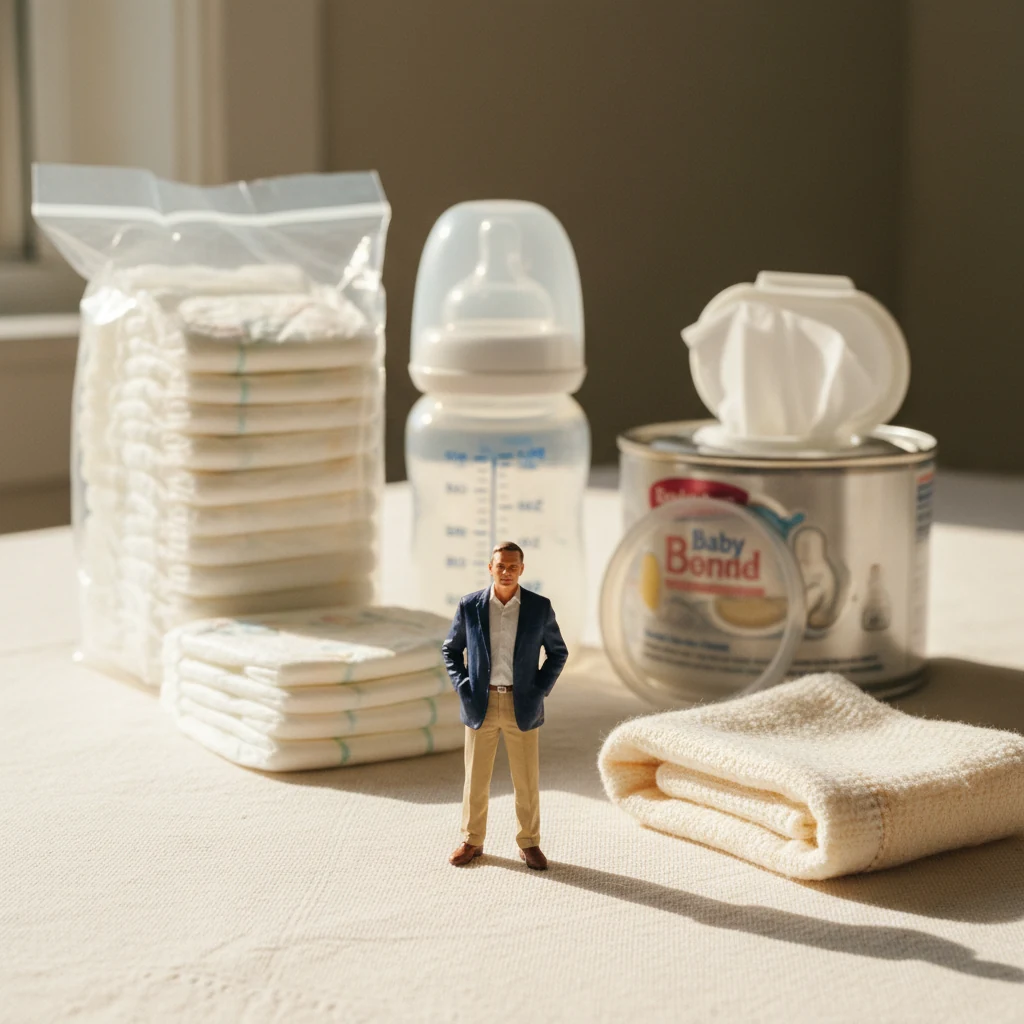
Second: baby splits cleanly into two operational worlds. Your consumables — diapers, wipes, formula, training pants, feeding pouches — are the textbook category for recurring revenue. Parents reorder these on a predictable cadence, often in exhausted-parent mode where setting it on autopilot is more valuable than saving a few cents. Amazon's autopilot feature (Subscribe & Save) is built for exactly this buyer. 1P listings get priority placement in Subscribe & Save's search and recommendation surfaces — and the compounding effect (every new subscriber adds to a recurring base) builds dramatically over 12–24 months in this category.
Your durables — strollers, car seats, monitors, high chairs — work differently. Lower frequency, higher consideration, longer purchase cycle. The lever here isn't recurring revenue; it's trust and brand presentation. The brand-controlled image-and-copy area below the listing bullets (called A+ Content) needs to be tight, accurate, and current. On 1P, that content gets coordinated and maintained on a regular cadence. On 3P, you can end up with multiple sellers each presenting your product slightly differently — exactly the kind of inconsistency that loses a careful parent's trust.
Which parts of your catalog fit 1P, and which don't
Diapers, wipes, formula, feeding consumables: Strong fit. Move your bestseller pack sizes to 1P (where Subscribe & Save compounds), keep specialty variants and limited-edition packs on 3P. The setup we typically recommend is Hybrid — hero consumables on 1P, the long tail stays on 3P.
Premium durables (car seats, strollers, monitors, high chairs): Strong fit for established brands. Trust signal matters most here, and if you're dealing with unauthorized resellers on Amazon (a common issue for recognized baby-durable brands), Full Channel setup — we operate as your only authorized Amazon vendor — is the structural fix. Otherwise Hybrid for your bestseller models works well.
Baby toys and developmental products: Decided product-by-product. The signature bestseller (the iconic activity gym, the bestseller bath toy) usually fits 1P; the long tail of seasonal and limited-edition items stays on 3P. Selective setup.
Maternity wear and accessories: Usually stays on 3P. Apparel-category dynamics (size variation, return rates, fast lifecycle iteration) argue against 1P for clothing specifically.
Specialty / niche baby brands (smaller catalog, focused product line): Decided product-by-product based on volume. Often one hero SKU is a clean 1P candidate while the rest stays on 3P.
The honest gotchas
Safety-claim accuracy and age-appropriateness disclosures (CPSC labelling, Health Canada equivalents, choking-hazard warnings, weight limits on car seats and strollers) apply equally on 1P and 3P — Amazon's policies treat them the same way regardless of channel. We coordinate with your regulatory and quality teams during catalog setup; we don't make claims independently of the brand.