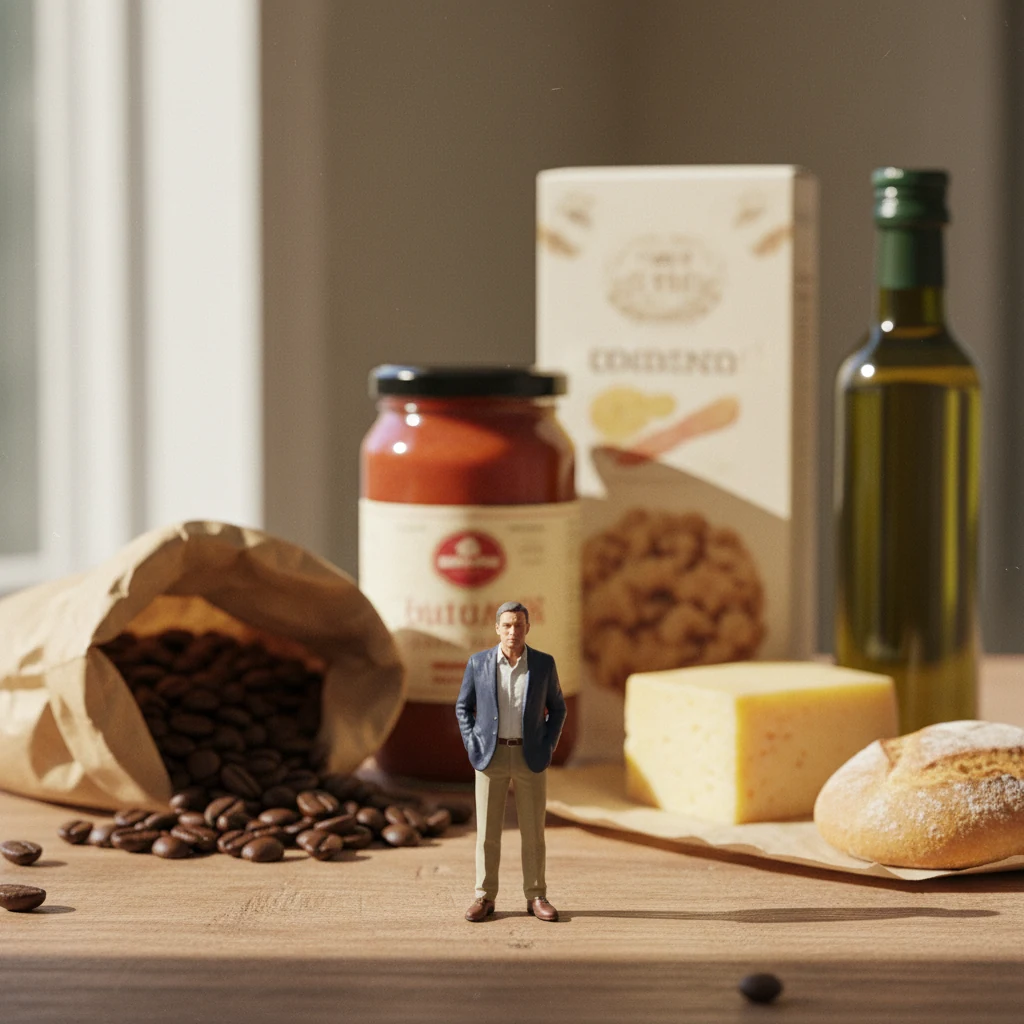
The grocery & food category on Amazon Canada
Grocery and specialty food on Amazon Canada has grown into one of the platform's most active categories. Post-pandemic, customer behavior shifted permanently — auto-replenishment habits for pantry staples, specialty foods, and routine grocery consumables stuck. People order coffee, tea, snacks, condiments, baking staples, baby food, and pet food the same way they order toilet paper: on autopilot.
If you make shelf-stable consumables in the right SKU profile, this is a great fit for the Amazon-wholesale channel (called 1P, short for first-party — meaning we sell your product to Amazon wholesale, and Amazon resells it to its customers). Here's why:
Subscribe & Save is the central lever. Amazon's autopilot reorder feature — customers set a product to ship every few weeks at a small discount — was practically designed for daily pantry consumables. Coffee, tea, snacks, condiments, breakfast items, baking staples, baby food, pet food: all textbook candidates. 1P-channel listings get priority placement in Subscribe & Save's search and recommendation surfaces, and the compounding effect (every new subscriber adds to a recurring revenue base) builds significantly over 12–24 months.
Amazon Business is significant for grocery. Schools, offices, healthcare facilities, and small-business operators source bulk pantry items, break-room supplies, coffee service, and snacks through Amazon Business (Amazon's B2B side — the version of Amazon companies use to source for workplaces). 1P-native Amazon Business pricing is the channel that surfaces your bulk pack sizes to those institutional buyers.
Brand protection matters for established CPG brands. If you have deep grocery distribution, you've probably seen your products listed on Amazon by sellers you never authorized — distribution leaks from independent retailers, returns aggregators, parallel imports. The same brand-protection pattern that household-cleaning brands experience applies: becoming Amazon's sole authorized vendor (called 1P consolidation) is the structural fix.
The category-specific compliance overhead
Food product compliance — Health Canada labelling, allergen disclosure, expiration / best-by date management — applies equally on 1P and 3P. We coordinate with your regulatory and label-design teams during catalog setup. Some product types are outside the 1P scope entirely because Amazon's 1P program covers shelf-stable categories only: refrigerated, frozen, fresh, alcoholic, and cannabis-adjacent products can't move to 1P regardless of fit.
Which parts of your catalog fit, which don't
Shelf-stable consumables (coffee, tea, snacks, pantry, baking): Strong fit. Move your bestsellers to 1P (where Subscribe & Save compounds), keep specialty variants and seasonal launches on 3P. The setup we typically recommend is Hybrid — your hero SKUs on 1P, the long tail elsewhere.
Bulk and institutional pack sizes (B2B): Strong fit specifically for the case-pack and bulk-format SKUs that schools, offices, and healthcare buyers source. Selective setup focused on those B2B-relevant pack sizes.
Established CPG brands with unauthorized-reseller chaos: Strong fit. Full Channel setup — we operate as your only authorized Amazon vendor — to structurally shut down the gray-market leakage.
Specialty, artisan, small-batch food: Often stays on 3P. Pricing flexibility for limited runs, frequent product-positioning iteration, and small-volume economics typically favor the 3P marketplace.
Refrigerated, frozen, fresh, alcoholic, cannabis-adjacent: Outside the 1P program scope. Stays on 3P (or other channels entirely).